A knowledge base for Gemini 4 Hydrogen, beyond one session
Keep current business context, reusable methods, and task outcomes available across runs.

An agent may have all the project context it needs during a task. In the next session, someone must explain the same background again: which policy is current, which decision was accepted, and whether the previous task actually resolved its open questions. Faster execution makes that handoff cost harder to ignore.
Google introduced Gemini 4 Hydrogen on November 12 for everyday coding, debugging, interactive development, and agentic work. It supports four thinking levels and can work alongside Carbon and Argon. Those capabilities make a separate question more pressing: where does the next task obtain the team's currently accepted knowledge?
Separate the model, its host, and shared knowledge
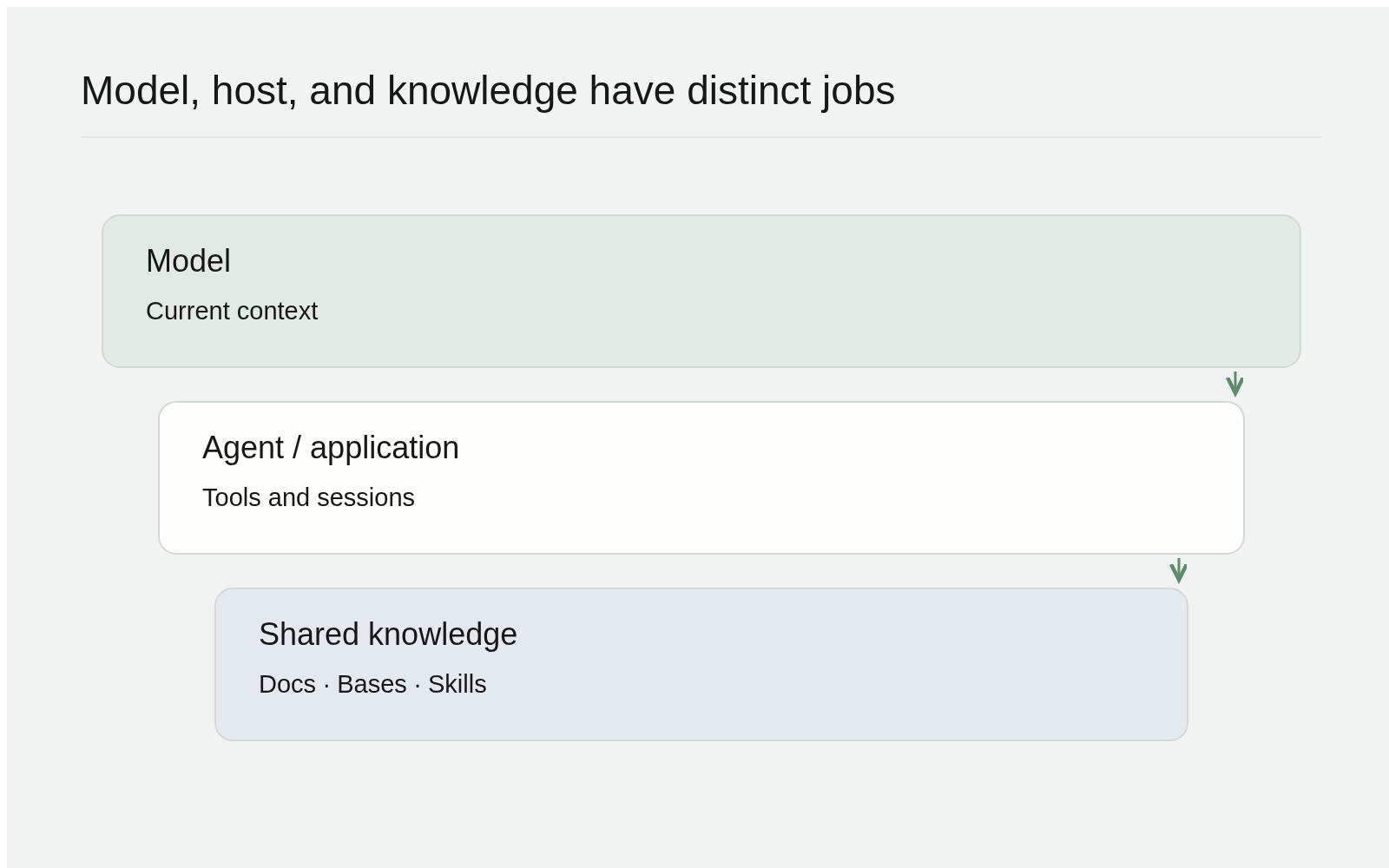
The model processes the context supplied to it. The hosting agent or application manages sessions, tools, and retrieval. An external knowledge layer holds documents, structured facts, and procedures that other tasks can read.
The host connects to Busabase. In an application built with the Gemini API, your application must coordinate retrieval, context construction, and writeback. Selecting a model does not install a connector in every Google interface. Confirm Hydrogen access in the actual host, then confirm that host's MCP or REST capabilities.
The distinction between memory, knowledge bases, and systems of record helps assign responsibility: temporary reasoning can stay in the session, durable explanation in documents, and consequential facts with their sources and accountable owners.
Structural illustration · designed workflow
Give facts, source material, and methods distinct homes
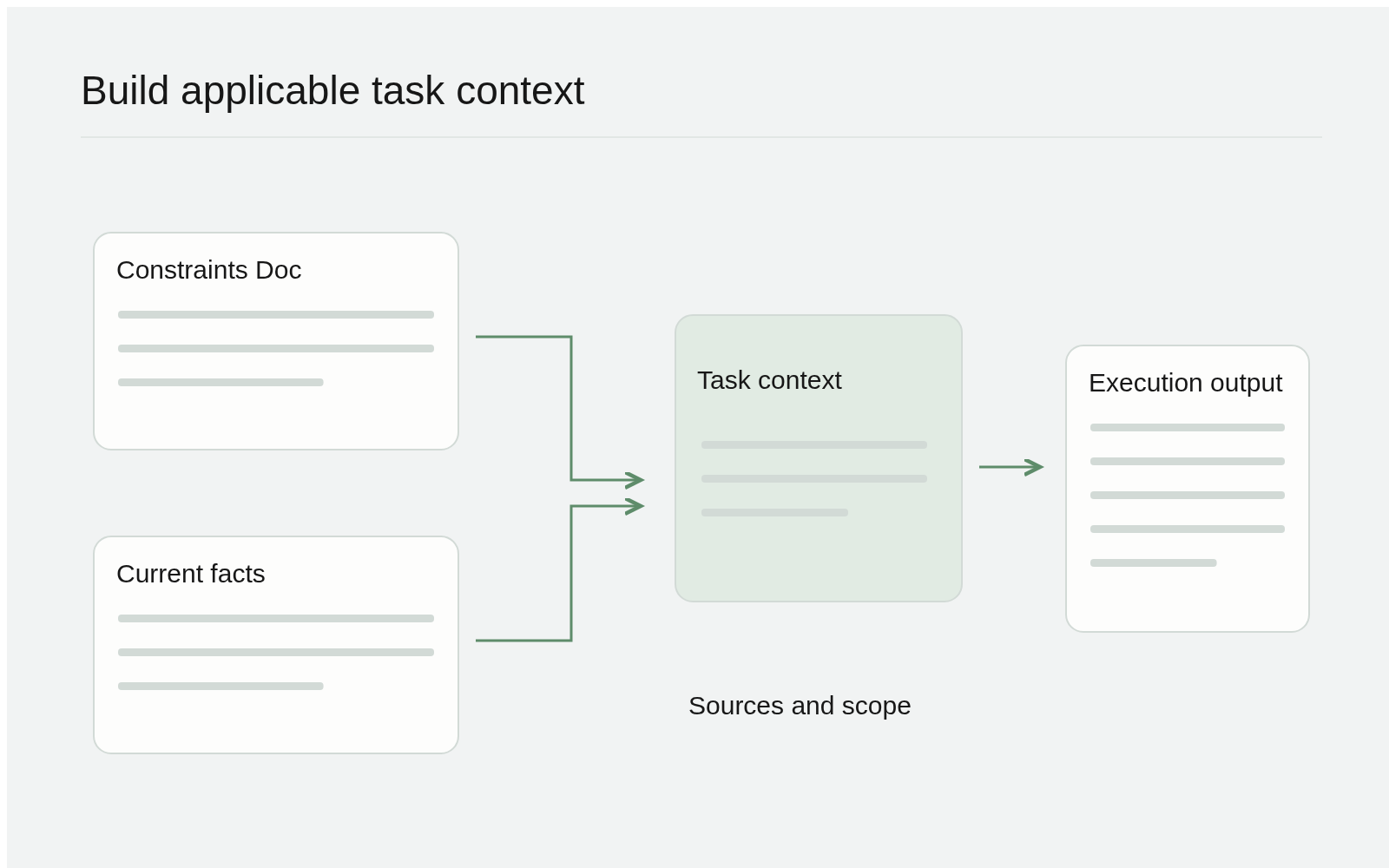
A suggested starter design uses a Folder for the project, a Doc for constraints and scope, a Base for queryable facts, and a Skill for the reading, deduplication, proposal, and verification method. This is a design you can adapt, rather than a preinstalled Hydrogen integration.
A facts Base can contain a short title, stable topic key, current conclusion, source URL, applicability, owner, and business state. A results Base can relate each task to the facts it used and retain its actual output URL, unresolved questions, and acceptance result. Link maintained source material rather than copying every document into a second collection.
Make the first cycle read-only
Connect the actual host using Bring Your Own Agent or the MCP guide. Verify identity and the selected Space with a read-only check. If several Spaces are available, make the choice explicit.
Ask the agent to search workspace playbooks, read the applicable method and project Doc, and retrieve facts for this task. Context supplied to the model should preserve sources, scope, and unresolved questions. Keyword relevance alone should not make an expired record an implementation requirement.
Structural illustration · designed workflow
Turn new findings into inspectable proposals
An adaptable instruction is:
Read this project's constraints and applicable current facts. Prepare source-linked context for the task. After execution, compare reusable conclusions with existing topic records. Propose field updates for existing topics and new records only for new topics. Preserve real sources, outputs, and unresolved questions. Submit review-required changes as proposals and return the differences and links.
The outputs are a constraint list, an actual task artifact, and a proposed knowledge change. Verify those separately. Code has its own tests; a reusable business conclusion needs the appropriate owner to accept its meaning and scope. An agent reporting completion is not evidence that both were accepted.
Start the next task from accepted current state
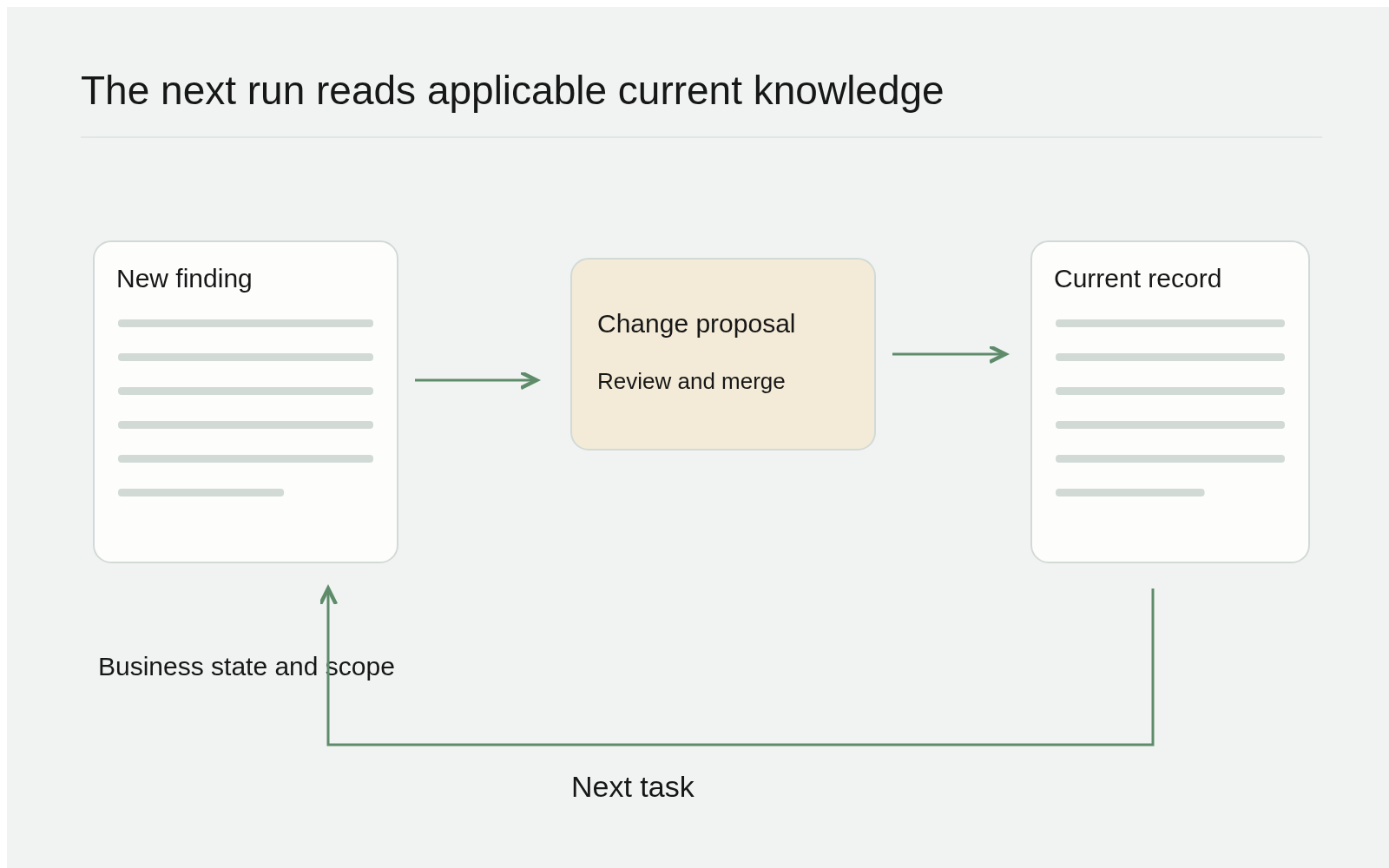
Busabase writes travel through ChangeRequests with diffs and history. Proposal-only access waits for review; write access may merge immediately. Enforce human review through the credential or supported request controls where it is required.
After merge, reread the record and its source relations. In the next session, retrieve current records and check their business state and applicability. A merged change can store a still-pending conclusion; merge status alone is not business acceptance. Return expired sources or unexplained conflicts to the owner.
Structural illustration · designed workflow
Add this layer when work outlives a conversation
For a one-off question with a small source set, a session and maintained documents may be enough. Shared knowledge becomes useful when work repeats, several agents use the same facts, those facts change, or the team needs to reconstruct who accepted a conclusion.
Begin with one project, one constraints Doc, and real facts another task needs. Complete reading, execution, proposal, acceptance, and readback, then resume from a fresh session. Success means the successor finds applicable knowledge and its evidence—not that model weights learned the company's documents. Start that cycle by connecting your own agent.