The Master Changed. Which Language and Channel Versions Need Review?
Trace each derivative to its source and assess the actual impact before revising and accepting it independently.

Creating language and channel versions of a master starts an ongoing maintenance job. A corrected product statement may affect a translated page, social post and customer email in different places and with different wording.
Rewriting everything wastes adapted work; announcing that the master changed does not identify where old claims remain. Planning the update requires recovering each version’s source and baseline, then assessing the effect on facts, commitments and media.
Busabase Variants keep language, channel and format derivatives as separate records with a relationship to their source. Teams can follow that relationship to find the versions to inspect, then decide what to change and who accepts each result.
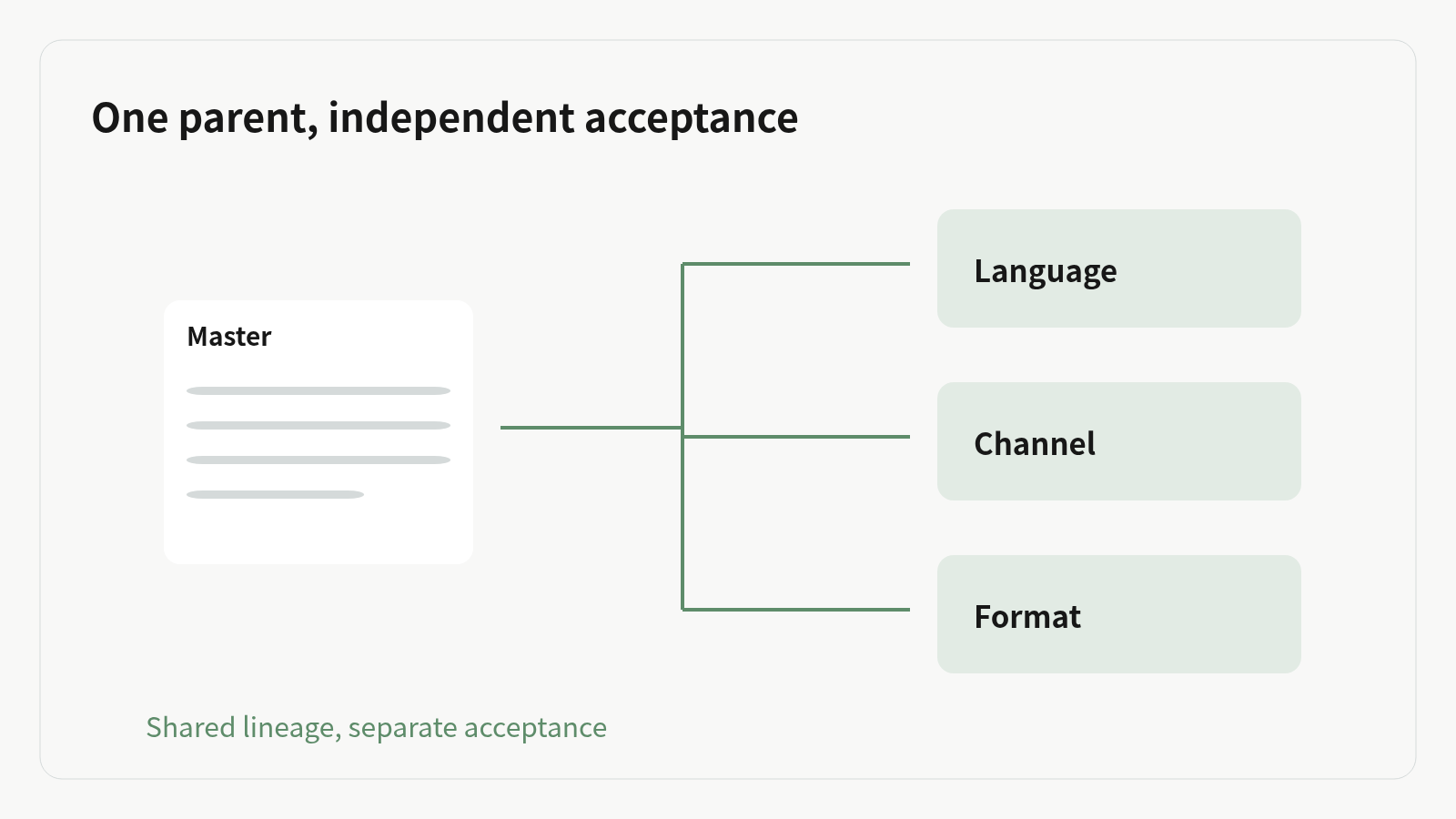
One parent, independent deliverables
The relationship answers where content came from. It does not establish that the current derivative remains correct. A master can produce multiple language and channel versions, while titles, paragraphs, media and next steps change for their readers.
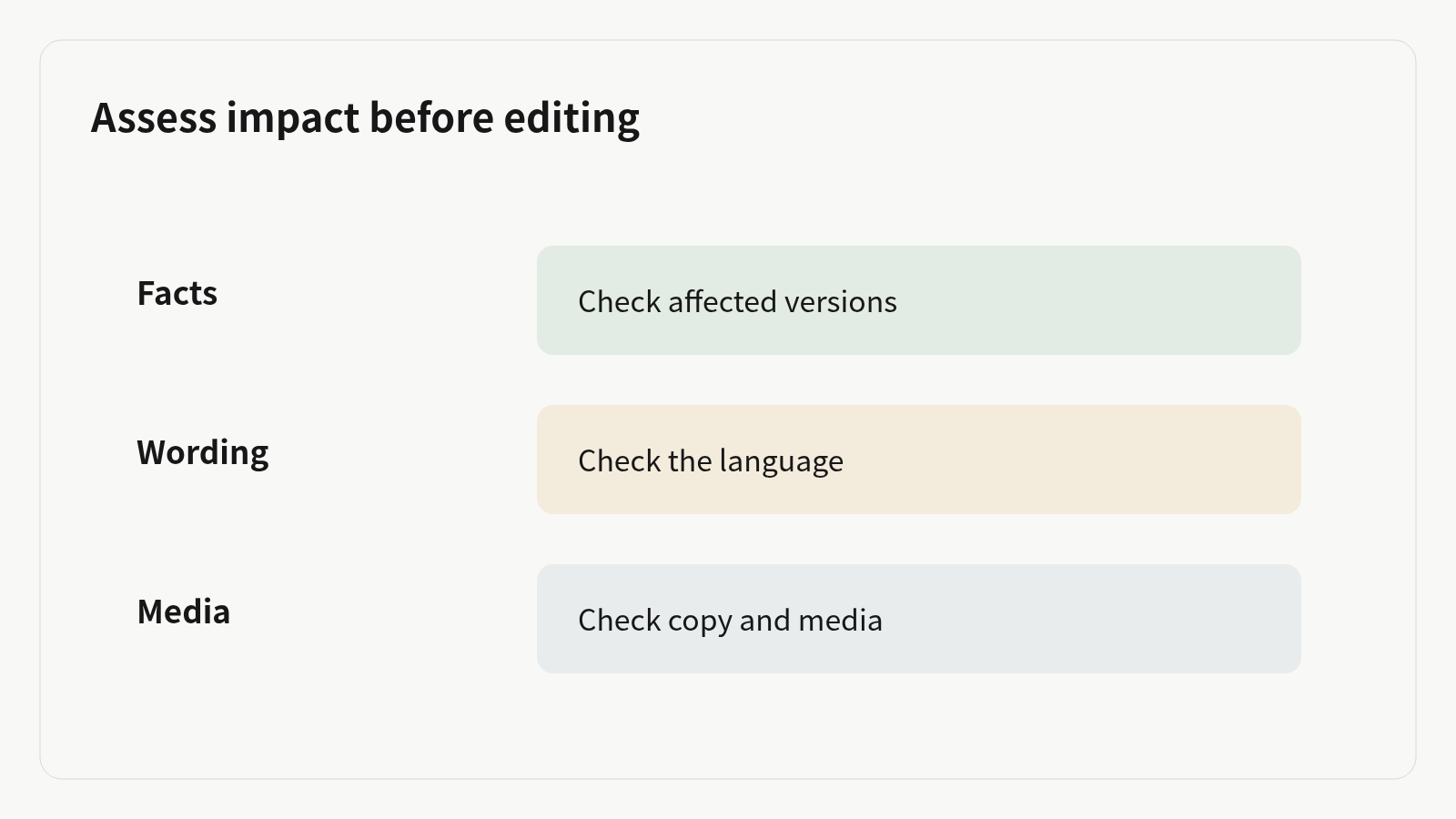
Avoid replacing every child with the entire new master. Identify the change and inspect how each child expresses it. A factual correction may affect every version using the claim. A language-specific wording change may affect only that language. Channel limits may require reorganizing the content.
Distinguish single-parent lineage from supporting sources. A derivative may cite several studies without having several parent records. Source fields or explicit record relations can retain those materials. Express what the content derives from separately from the evidence it references.
Save the change, not only an updated state
Before checking derivatives, record the master’s current version and the specific changes. Classify them as facts, commitments, instructions, links or visuals. Calling everything “wording improvements” gives the next person little basis for impact assessment.
| Review object | Information to retain | Purpose |
|---|---|---|
| Master and its language or channel versions | Current content and source relationship | Locate the content to maintain |
| Version checklist | Last accepted master version, affected locations, owner and outcome | Track this round of revisions |
| Editorial standards | Factual, writing and visual requirements by channel | Give reviewers a shared basis |
Use the existing task table for this checklist where possible. There is no need for another content repository. Identify the objects, scope and owners before assigning edits.
Ask for a read-only impact assessment first
Give the Agent the master’s previous and current content alongside its derivatives. Ask how the change affects their meaning, not only whether text matches. Translations can reorder sentences, short versions can omit conditions, and images can preserve old claims after prose changes.
Use an instruction like this:
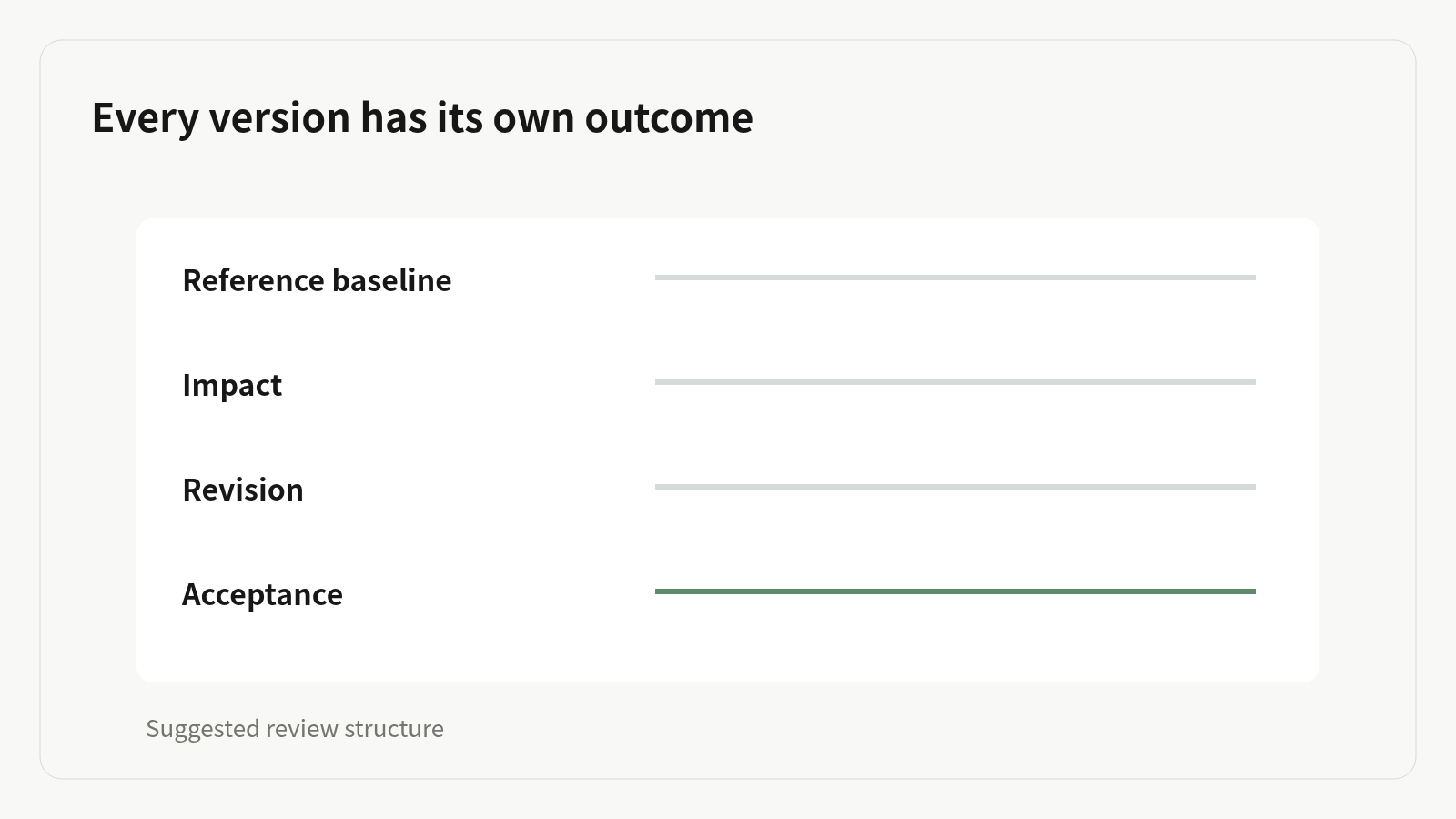
Read this master’s changes and all related language and channel versions. For each, list its reference baseline, affected paragraphs or images, recommended edits and reasons no edit is needed. Separate uncertain items rather than treating them as accepted. Return the checklist first. Do not edit bodies or submit publication.
The checklist should cover every required deliverable. If a version is missing, list it as missing. If its reference version cannot be established, retain baseline unknown as an unresolved issue. No obvious difference found and acceptance completed are different conclusions.
Revise by impact and accept by version
After confirming scope, propose changes to specific child records through ChangeRequests. Explain the master change, edit location and retained content. Preserve the parent-to-child relationship; a new title does not justify a second equivalent derivative.
Localization requires editorial judgment. Product commitments should remain consistent, while headings, examples and information order can suit the audience. If a short-channel version drops a necessary condition, restore it or narrow the claim. Keeping an old length limit is not a reason to keep a distorted statement.
Check copy and media together. An updated body with an outdated cover still gives readers inconsistent information. Review each language’s title, short description, body, cover and inline images, recording acceptance, revision needed or verification pending.
Several versions may be reviewed in one coherent proposal, but one cannot substitute for another’s acceptance. An accepted language does not prove the meaning and media in two others are correct.
Verify child records and actual destinations
A Record represents the current merged content. After appropriate approval and merge, read each child back. Check that content, lineage and acceptance decisions agree. Unresolved master changes should remain visible in the checklist.
If the assignment includes website or channel publication, verify the actual page or published result separately. Updated authoritative content, updated web rendering and an external post are different delivery layers. Preserve real links and inspection results for each; publication authorization also remains channel-specific.
The next master update should read the last accepted baseline, existing derivatives and unfinished tasks. Do not carry an old all-accepted state forward to a different master version.
The useful outcome is a checklist explaining what each version relies on, what needs revision and who has checked it. Start with one real master that has several derivatives and complete a read-only assessment. For the wider delivery process, see seven real-world practices; when the data structure changes, perform a separate schema compatibility check.